
World TB Day 2016: What we’re doing at COMDIS-HSD to End TB

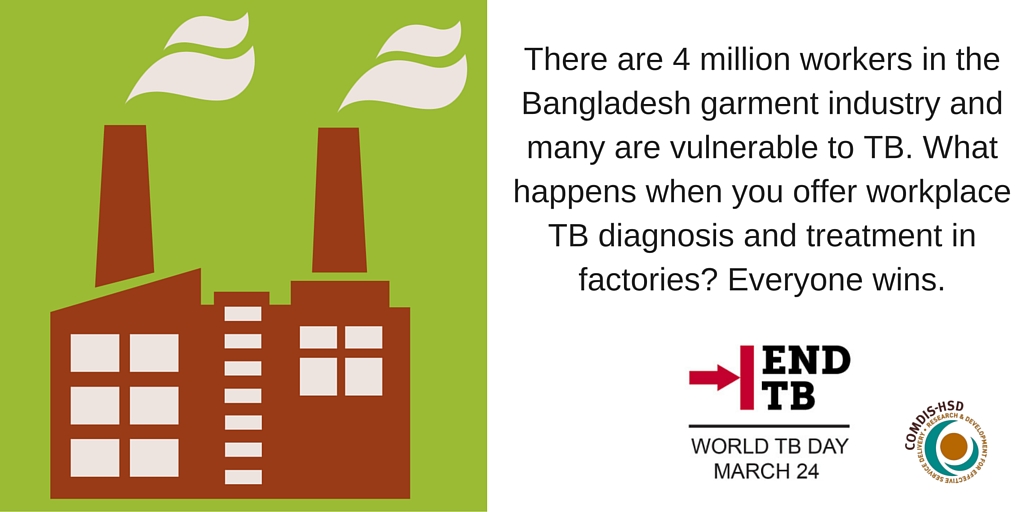
One of our series of Tweets to showcase our TB work on World TB Day 2016

One of our series of Tweets to showcase our TB work on World TB Day 2016


This year the World Health Organization (WHO) is calling on countries to ‘Unite to End TB’. Ending TB by 2030 is a target of the Sustainable Development Goals and a programme priority for COMDIS-HSD and our partners.
More than 4,000 people lose their lives each day to this leading infectious disease. Many of the communities that are most burdened by tuberculosis are poor, vulnerable and marginalised.
WHO has highlighted some important progress in the 30 countries with the highest TB burden. It says that a number of countries are strengthening the strategic agendas of their TB programmes by adopting newer tools, extending access to care and linking with other parts of government to reduce the financial costs for patients.
At COMDIS-HSD we are contributing in all these areas and on World TB Day 2016 we’re taking the opportunity to share more widely some of our research and key findings:
Video briefings

Blog

Research evidence

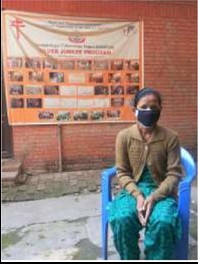
A patient featured in HERD's special series on TB: "I have not only been helped economically but psychologically too."

A patient featured in HERD’s special series on TB: “I have not only been helped economically but psychologically too.”


In addition to their ongoing TB research, our partners are also taking active parts in this year’s World TB Day activities. HERD Nepal is taking the TB message out to the community by sharing material and talking about the stigma related to TB. See their full report of the day’s activities in Nepal.
HERD have also produced a special series of articles and insights celebrating Nepal’s efforts towards tuberculosis control, particularly over the last 10 years.
The series includes some interesting personal perspectives from policy makers, medical practitioners and patients about how they view TB interventions and services.
One patient featured in the series was diagnosed with MDR-TB but was concerned that she could not afford the lengthy 20-month treatment. However, doctors referred her to a facility where she is receiving free MDR-TB treatment and hostel accommodation.
“I have not only been helped economically but psychologically too. When I first came here, I was not sure what was going to happen but with the constant support from the staff and other patients, I realised I was in safe hands. Now I am confident I will stay here and receive the treatment and return home fully recovered from the disease.”
In Bangladesh, ARK Foundation joined up with their partners at the National TB Control Programme, marching with banners in the lively World TB Day rally in Dhaka.
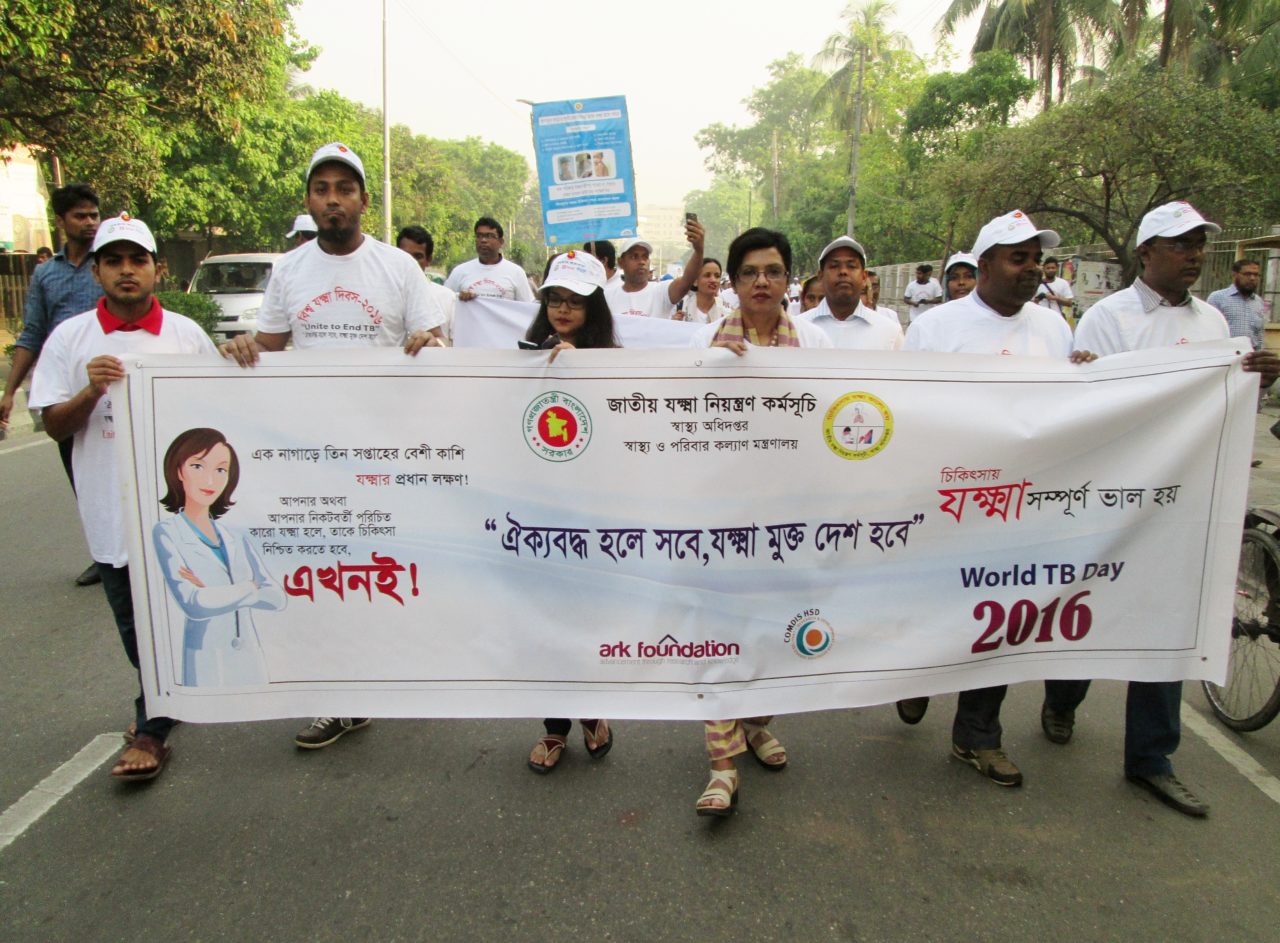
The ARK team take to the streets of Dhaka with their End TB message on World TB Day 2016

The ARK team take to the streets of Dhaka with their End TB message on World TB Day 2016


The day’s activities were covered by a number of electronic and print media. Dr Md Quamrul Islam, Director of Mycobacterium Disease Control (MBDC) and Line Director of TB and Leprosy thanked all partner NGOs for their active participation in observing World TB Day 2016.
 

Dr Rumana Huque talks about the challenges of providing free TB treatment for factory workers

A Directly Observed Treatment corner in a garment factory in Bangladesh

A Directly Observed Treatment corner in a garment factory in Bangladesh


On 24th March, it will be World TB Day. Under the National TB Programme (NTP), we can all make use of free TB diagnosis and treatment. But uptake to this free service is surprisingly slow. Why is this?
My personal view is that there are still many myths that we have to overcome, the biggest one being that TB cannot be cured. This is simply not true: TB is 100% curable, and each and every one of us can have free treatment if we go to any of the NTP clinics for diagnosis and treatment.
If you work in a factory that is part of the Bangladesh Garment Manufacturers and Exporters Association (BGMEA), then their doctor or paramedic can test you for free, without you losing your pay or having to stop work for treatment. However, not all factories are part of BGMEA, and we at ARK Foundation know the challenges of trying to persuade employers to invest in diagnosis and treatment for their staff.
When we conducted research, with the help of the BGMEA factories, we found that factory managers were reluctant to allow workers to visit TB diagnosis centres during working hours, and also reluctant to allow their staff to continue working once they were diagnosed with TB. In some factories, even the workers were uncomfortable accepting their colleagues back into the workplace.
We also found that some medical staff based in the factories thought that keeping up-to-date treatment records was time-consuming, and factories without medical facilities struggled to organise the referral mechanism that we were proposing, and struggled to maintain records.
All these challenges still exist, and do not help the cause of fighting TB. What did we do to tackle these challenges? We held orientation and educational activities for a large number of workers to challenge the stigma and myths surrounding TB. Most importantly, we gave them information on how they can get free diagnosis and treatment, and we persuaded factory managers that it was in their best interests (and ultimately more profitable) if they didn’t sack workers who were diagnosed with TB, but instead let them continue treatment while working for them.
Our project had a 100% success rate; everyone who worked in the BGMEA factories who was diagnosed with TB went on to complete their treatment and is 100% cured.
So what can we take away from this? My view is that providing workplace TB control depends on the management’s good understanding of what it takes to control TB in the workplace. Management also need to commit to allowing workers diagnosed with TB to continue to work in their factories and visit diagnosis centres during working hours.
Our experience of working with BGMEA factories can easily be replicated in other business sectors. However, national policies and funds should be mobilised to provide encouragement and support. Armed with this evidence, the NTP is in a strong position to initiate relationships with trade associations to help the workers and managers of Bangladesh control TB.
Dr Rumana Huque is Executive Director of ARK Foundation in Bangladesh.

Bold media plan and strong lifestyle messages take ARK’s NCD work to the nation

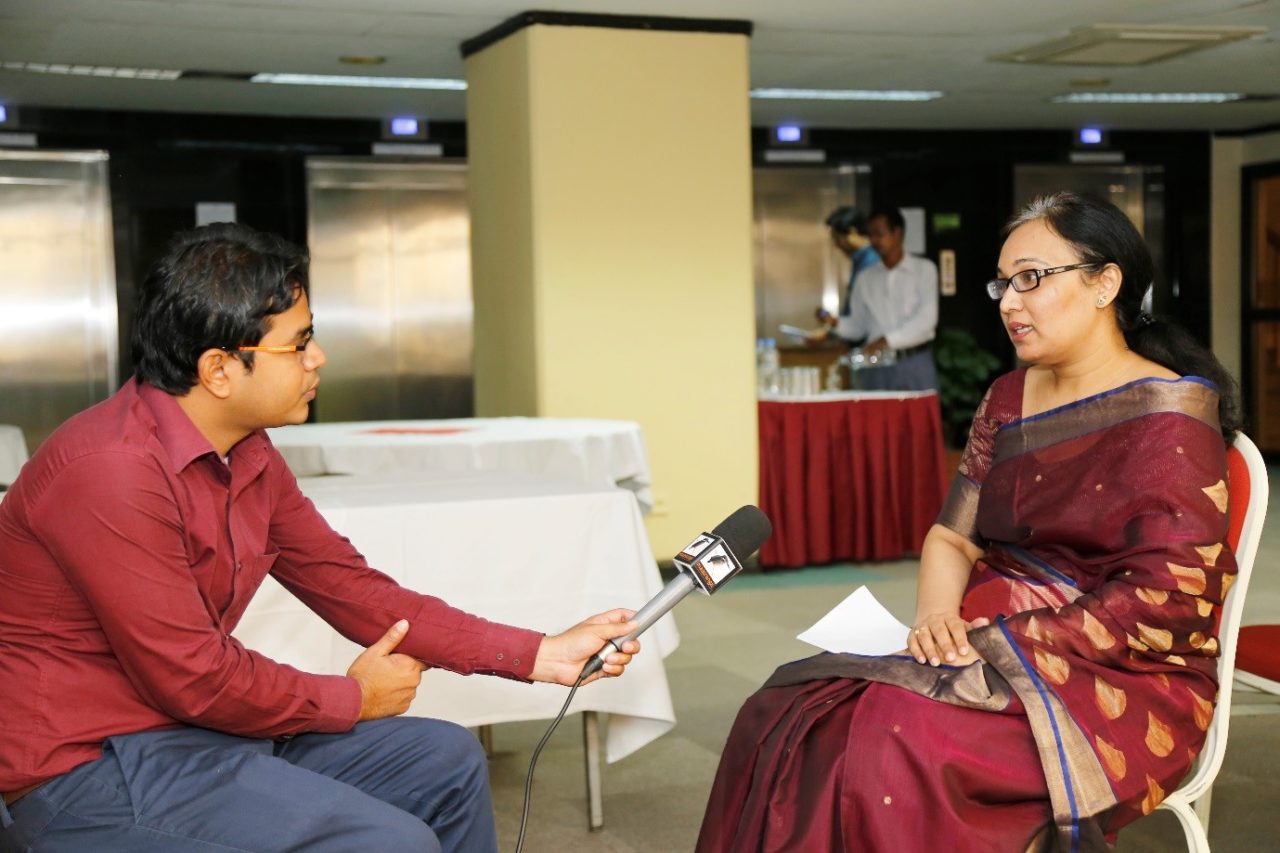
Rumana being interviewed by TV journalist

ARK’s Dr Rumana Huque being interviewed at the national NCD workshop by a TV journalist


A bold media strategy targeting top TV and print journalists has allowed our ARK Foundation partners to reach millions with their message about better prevention and treatment of non-communicable diseases (NCDs) in Bangladesh.
Strong lifestyle messages about unhealthy food habits, low levels of physical activity, smoking and pollution were at the centre of ARK’s recent national workshop on NCDs and helped secure prominent TV coverage for the event across Bangladesh’s three main news channels, as well as wide coverage in the top-rated newspapers and their online versions.
The event, however, went beyond public health headlines and started a national dialogue on the practical service delivery steps that will help Bangladesh reduce the personal, social and economic impact of NCDs. Currently, NCDs, such as cardiovascular disease and diabetes, are responsible for more than 60% of Bangladesh’s annual mortality and account for 60% of the country’s disease burden (measured by financial cost and years of quality life lost).
The event was co-hosted by ARK and the Non-Communicable Disease Control (NCDC) Unit of the Directorate General of Health Services (DGHS). More than 60 participants from all levels of the health service, including delegates from the World Health Organization, came together to share ideas on how to improve prevention, diagnosis and treatment of NCDs in primary care.
According to Dr Rumana Huque, Executive Director of ARK, a key factor in the success of the event was the decision to include managers from every level of the health service.
‘The participants were diverse and that was very important. We had local level healthcare managers who have the practical knowledge of what is happening on the ground to control and treat NCDs. But we also had mid-level programme managers who support them and the senior-level policymakers who take the final decisions.
‘So what came out at the workshop were the challenges that service providers are already facing and the recommendations that we have generated through or work at ARK.
‘Through our research we know that we need more counselling for NCD patients, better training for doctors and health providers, a better supply of medications, improved record keeping and stronger referral links between different parts of the health service.’
Dr Huque, who is part of the core team drafting the Sector Programme – the strategic investment programme for the next five years – added that workshop had been very timely.
‘The workshop helped everyone focus on the priorities; specifically improved NCD services and better lifestyle education. Senior managers and policy makers took note and said that they would be feeding what they had learned into the next Sector Programme.’
Giving the keynote speech at the workshop, Professor Dr Abul Kalam Azad, DGHS Additional Director General (Planning and Development), told delegates that NCDs are responsible for 62% of deaths happening every year in Bangladesh.

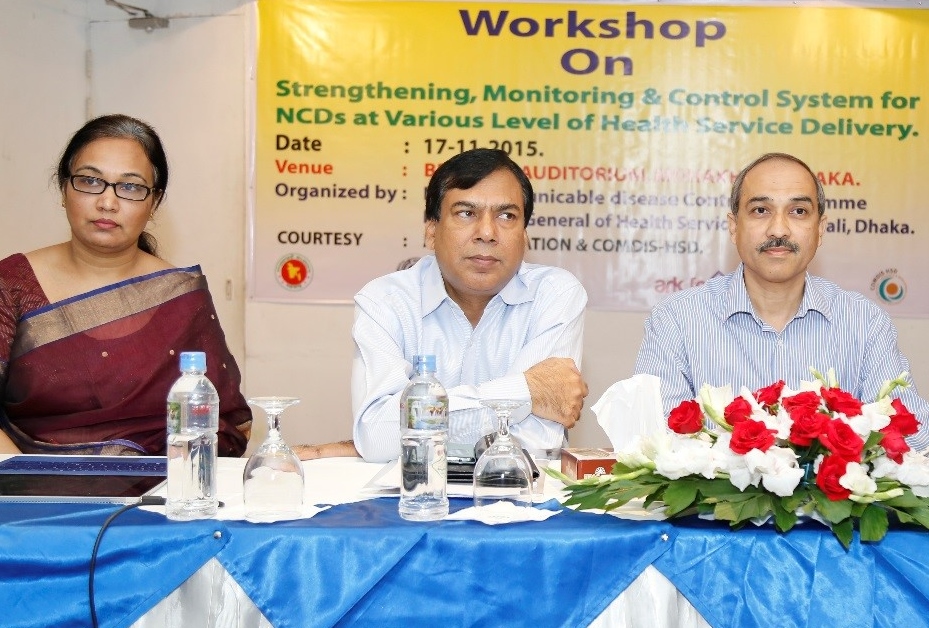
Key speakers at ARK’s national NCD workshop. From left: Dr Rumana Huque, Executive Director of ARK, Prof Dr Abul Kalam Azad, DGHS Additional Director General (Planning and Development), Prof Dr Enayet Hussain, NCDC Unit Line Director


He said that Bangladesh had not placed sufficient importance on NCDs, with catastrophic results in terms of premature mortality.
As part the COMDIS-HSD programme, ARK has been working with primary health care facilities in Bangladesh to establish better screening, treatment and referral processes for people with NCDs. Their experience and research findings were fed into group discussions to identify urgent actions that will help Bangladesh achieve its Sustainable Development Goal target of reducing NCD premature mortality by one third by 2030. These include the more timely supply of medicines, a wider range of medicines and dedicated doctors and health educators in ‘NCD corners’ in district hospitals.
Find out more:

Influencing TB policy and practice in Bangladesh using a Public-Private Mix approach

PPP bangladeshIn a high TB burden country such as Bangladesh, National TB Control Programmes (NTPs) often adopt the Stop TB Strategy. These are delivered primarily through government-run health facilities, but these programmes often have little contact with private medical practitioners (PMPs).
COMDIS-HSD developed a Public-Private Mix (PPM) model to involve private doctors in the National TB Programme’s urban TB control activities. We piloted the PPM model in 4 research sites in Dhaka city. The study came up with 6 key policy messages and 6 key research findings.